AI Weekly Recap: Sonnet 4.6, Alibabas Qwen3.5 und der Globale Süden rückt in den Mittelpunkt
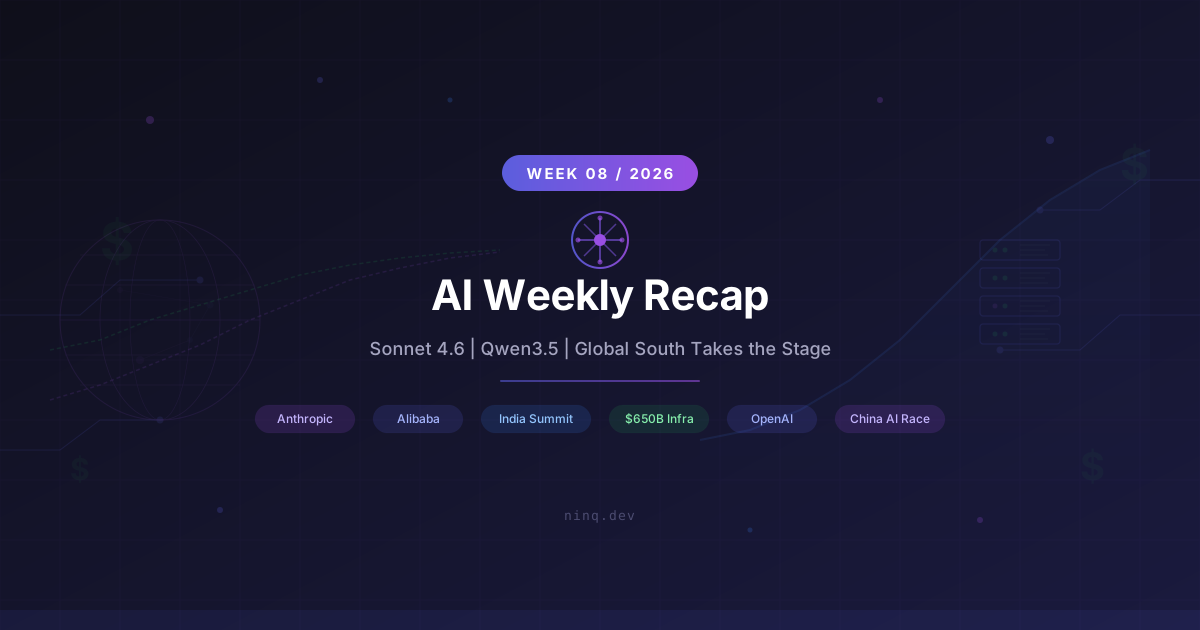
Die wichtigsten KI-News der Woche – Anthropic launcht Sonnet 4.6, Alibaba veröffentlicht Qwen3.5, Indien richtet den ersten großen KI-Gipfel im Globalen Süden aus und Big Tech investiert 650 Milliarden Dollar in Infrastruktur.
AI Weekly Recap: Sonnet 4.6, Alibabas Qwen3.5 und der Globale Süden rückt in den Mittelpunkt
Die letzte Woche stand im Zeichen der großen Launches – Opus 4.6, GPT-5.3-Codex und der SaaS-Schock. Diese Woche beruhigt sich der Staub langsam, aber das Tempo hält an. Anthropic hat Sonnet 4.6 veröffentlicht, Alibaba konterte mit Qwen3.5, Chinas KI-Labore legten eine ganze Release-Welle hin, Indien eröffnete den ersten großen KI-Gipfel im Globalen Süden, und Big Tech kündigte zusammen 650 Milliarden Dollar an KI-Infrastruktur an. Hier ist, was zählte.
Anthropic launcht Claude Sonnet 4.6
Zwei Wochen nach Opus 4.6 schiebt Anthropic Sonnet 4.6 nach. Der Pitch: Opus-nahe Intelligenz zu Sonnet-Preisen. Erste Berichte deuten auf deutliche Verbesserungen bei mehrstufigem Coding, Finanzanalysen und Computer Use hin – einige Nutzer beschreiben die Computer-Use-Fähigkeiten als „nahe am menschlichen Niveau".
Das ist eine bewusste Kompressionsstrategie. Frontier-Fähigkeiten sickern schneller denn je in günstigere Preisstufen. Wenn Sonnet 90 % von dem leisten kann, was Opus leistet – zu einem Bruchteil der Kosten –, brauchen die meisten Entwickler und Unternehmen die Top-Stufe gar nicht mehr. Das ist gut für die Adoption und setzt jedes Preismodell der Konkurrenz unter Druck.
Alibaba veröffentlicht Qwen3.5
Alibaba hat am 17. Februar Qwen3.5 veröffentlicht, ein Open-Weight-Modell mit 397 Milliarden Parametern und neuen agentischen Fähigkeiten. Selbst gemeldete Benchmarks setzen es auf Augenhöhe mit den führenden Modellen von OpenAI, Anthropic und Google DeepMind.
Das „selbst gemeldet" verdient Skepsis – wie immer. Aber das größere Signal ist real: Der Abstand zwischen chinesischen und westlichen Frontier-Modellen schrumpft schnell. Vor einem Jahr versuchten diese Labore noch aufzuholen. Heute launchen sie im Abstand von Tagen und konkurrieren auf denselben Benchmarks. Der Open-Weight-Ansatz sorgt zudem dafür, dass Qwen3.5 sich rasch im Entwickler-Ökosystem verbreiten wird.
Chinas KI-Labore drehen auf
Alibaba war nicht allein. Zhipu AI veröffentlichte GLM-5, ein Open-Source-Modell mit 128 Milliarden Parametern, gebaut für Coding und agentische Aufgaben – und behauptet, es sei vollständig auf inländischen chinesischen Chips trainiert worden, nicht auf NVIDIA-Hardware. Wenn das stimmt, ist das ein wichtiger Meilenstein für Chinas Story der Halbleiter-Unabhängigkeit.
ByteDance brachte Seedance 2.0 für Video-Generierung heraus, Kuaishou stellte Kling 3.0 als multimodales Modell vor. Das chinesische KI-Ökosystem hält nicht nur Schritt – es liefert in einer Geschwindigkeit, neben der Silicon Valleys Release-Kadenz fast gemächlich wirkt.
OpenAI: Codex-Spark, Retirements und Marken-Ärger
Auch OpenAI hatte eine geschäftige Woche. GPT-5.3-Codex-Spark wurde als Research Preview gelauncht – ein ultraschnelles Coding-Modell, gemeinsam mit Cerebras entwickelt, das über 1.000 Tokens pro Sekunde liefert. Anders als das vollständige Codex-Modell für autonome Langläufer-Aufgaben ist Spark auf schnelle Iteration optimiert: kurze Edits, sofortiges Feedback, Echtzeit-Pair-Programming.
Das Aufräumen alter Modelle ging weiter. OpenAI hat GPT-4o, GPT-4.1, GPT-4.1 mini, o4-mini sowie die GPT-5 Instant- und Thinking-Varianten offiziell aus ChatGPT entfernt. Der Modell-Friedhof wächst.
In weniger glamourösen News: OpenAI darf das Wort „Cameo" in einem Produkt vorerst nicht verwenden – wegen eines Markenstreits. Zwischen diesem Streit und der Verzögerung beim Jony-Ive-Gerät stoßen ihre Non-Model-Initiativen weiter an juristische Wände.
Indien richtet den ersten Global AI Impact Summit aus
Indien hat diese Woche den AI Impact Summit 2026 in Neu-Delhi eröffnet – die erste große globale KI-Konferenz im Globalen Süden. Rund 100 Länder sind vertreten, mit führenden Köpfen wie Sundar Pichai und Sam Altman vor Ort.
Premierminister Modi eröffnete die India AI Impact Expo, auf der 12 neue KI-Modelle indischer Unternehmen vorgestellt wurden, trainiert für lokale Sprachen und reale Probleme. Indien stellte zudem über 200 Milliarden Dollar an KI-Investitionen in den nächsten zwei Jahren in Aussicht.
Sam Altman sagte auf der Konferenz, die Welt müsse „dringend" die rasant fortschreitende Technologie regulieren. Aus dem Mund des CEOs einer Firma, die gerade angefangen hat, Werbung in ChatGPT zu schalten, klingt der Ruf nach Regulierung ironisch – aber er hat nicht unrecht.
Big Tech kündigt 650 Milliarden Dollar an KI-Infrastruktur an
Google, Amazon, Meta und Microsoft haben den größten gemeinsamen Capex-Plan der Geschichte angekündigt – rund 650 Milliarden Dollar für KI-Infrastruktur im Jahr 2026. Allein Amazon plant 200 Milliarden.
Die Reaktion des Marktes? Ihre kombinierte Marktkapitalisierung sackte um über 950 Milliarden Dollar ab. Anleger zweifeln nicht daran, ob KI funktioniert – sie zweifeln daran, ob die Renditen die Ausgaben rechtfertigen. Es ist das klassische Infrastruktur-Dilemma: Jemand muss die Straßen bauen, aber Straßen zahlen sich nicht immer selbst.
Meta und NVIDIA kündigten zudem eine mehrjährige strategische Partnerschaft an – Meta setzt für Next-Gen-Cluster auf NVIDIAs Vera-Rubin-Plattform und das Spectrum-X-Ethernet-Networking.
Googles Responsible-AI-Report und neue Regulierungen
Google hat seinen Responsible AI Progress Report 2026 veröffentlicht und stellt darin Arbeit aus Produktentwicklung, Forschung und Gesundheitswesen heraus. Der Report betont die These, dass agentische KI-Systeme kurz davor stehen, die Produktivität dramatisch zu steigern – eine Aussage, die ebenso aufregend wie vage ist.
Auf der Regulierungsseite treten am 20. Februar Indiens neue IT-Rules in Kraft: Plattformen müssen KI-generiertes Audio und Video kennzeichnen und illegale Inhalte innerhalb von drei Stunden entfernen. Bei Verstößen drohen empfindliche Strafen. Es ist eine der konkretesten und am stärksten durchsetzbaren KI-Content-Regulierungen einer großen Volkswirtschaft, die wir bislang gesehen haben.
Parallel dazu prüfen US-Bundesbehörden bundesstaatliche KI-Regeln mit Frist bis März 2026 – mit dem Ziel, überzogene Staaten-Gesetze wie Kaliforniens geplantes KI-Hiring-Gesetz zu unterbinden.
Mozilla launcht Ein-Klick-KI-Privacy-Tool
Mozilla hat in Firefox ein neues Privacy-Feature ausgerollt, mit dem Nutzer per Mausklick ihre Daten aus KI-Trainingsdatensätzen entfernen und ein Opt-out setzen können. Es ist Teil der breiteren „Trustworthy AI"-Initiative.
Das ist ein kleiner, aber wichtiger Schritt. Die meisten Menschen wissen gar nicht, dass ihre Daten fürs Training genutzt werden, und noch weniger wissen, wie sie sich abmelden können. Es auf einen Klick zu reduzieren, beseitigt die größte Hürde: Friction. Andere Browser werden nachziehen – oder unter Druck geraten.
Kurz und knapp
- UK kündigte umfangreiche Fördermittel für globalen KI-Zugang an, darunter ein African Language Hub mit Unterstützung für 40 Sprachen und 700 Millionen Menschen sowie ein Compute Hub in Kapstadt.
- Deutsche Bank berichtet, dass 85 % der Entwickler inzwischen KI-Coding-Assistenten nutzen, mit Produktivitätsgewinnen von bis zu 60 % – und stellt fest, dass die Softwareentwicklung selbst der Sektor sein könnte, der KI-Disruption am stärksten ausgesetzt ist.
- OpenAI hat Peter Steinberger angeheuert, den Schöpfer von OpenClaw, dem viralen Open-Source-KI-Agenten. Der Talentkampf verschiebt sich von Forschern hin zu Agent-Infrastruktur-Buildern.
- Anthropic hat das Model Context Protocol (MCP) an die Linux Foundation übergeben. OpenAI, Microsoft und Google nutzen es inzwischen alle – ein seltener Moment industrieweiter Konvergenz.
- Safety-Bedenken köcheln weiter. Prominente Forscher mehrerer Labore haben öffentlich gewarnt, dass Capabilities der Safety-Arbeit davonlaufen. Dario Amodei sprach davon, „nur wenige Jahre von einem Land voller Genies in einem Rechenzentrum" entfernt zu sein.
Das war die Woche. Die Frontier-Modelle werden günstiger und schneller, die Infrastruktur-Wetten größer, und der Rest der Welt nimmt allmählich Platz am Tisch. Die eigentliche Frage ist nicht mehr, wer das beste Modell hat – sondern wer das beste System darum herum baut.
AI Weekly Recap: Werbung in ChatGPT, Anthropics 30-Milliarden-Runde und der SaaS-Billionen-Einbruch
Die wichtigsten KI-News der Woche – OpenAI startet mit Werbung, Anthropic schließt eine Mega-Runde ab, neue Frontier-Modelle erscheinen und der SaaS-Markt verliert eine Billion Dollar Marktkapitalisierung.
Claude Code, agents.md Mythen und der KI-Tsunami: Was du jetzt wissen musst
Die wichtigsten KI-News der Woche – Claude Code Remote Control, die agents.md-Studie der ETH Zürich, Nvidias Physical AI, Mercury 2, Perplexity Computer und der Arbeitsmarkt-Tsunami.
Related Articles