Einstieg in Large Language Models
Eine praktische Einführung in LLMs – was sie sind, wie sie funktionieren und wie man heute mit ihnen anfängt zu bauen.
Einstieg in Large Language Models
Large Language Models (LLMs) haben verändert, wie wir mit Technologie interagieren. Von der Code-Generierung bis zur Content-Erstellung werden diese Modelle zu unverzichtbaren Werkzeugen für Entwickler und Professionals.
Was ist ein LLM?
Ein LLM ist ein neuronales Netzwerk, das auf riesigen Mengen an Textdaten trainiert wurde. Es lernt Muster in Sprache – Grammatik, Fakten, Reasoning – und kann auf Basis von Prompts kohärenten Text erzeugen.
Die entscheidende Erkenntnis ist: Skalierung zählt. Modelle mit Milliarden von Parametern zeigen emergente Fähigkeiten, die kleinere Modelle schlicht nicht haben:
- Komplexes Reasoning
- Code-Generierung
- Mehrstufiges Problemlösen
- Wissensübertragung über Domänen hinweg
Wie du loslegst
1. Wähle deine API
Der zugänglichste Weg, mit LLMs zu arbeiten, führt über APIs:
const response = await fetch('https://api.anthropic.com/v1/messages', {
  method: 'POST',
  headers: {
    'Content-Type': 'application/json',
    'x-api-key': process.env.ANTHROPIC_API_KEY,
    'anthropic-version': '2023-06-01',
  },
  body: JSON.stringify({
    model: 'claude-sonnet-4-20250514',
    max_tokens: 1024,
    messages: [{ role: 'user', content: 'Erkläre Quantencomputing einfach.' }],
  }),
})
2. Beherrsche das Prompting
Gute Prompts machen den Unterschied zwischen brauchbaren und unbrauchbaren Outputs. Wichtige Prinzipien:
- Sei spezifisch – Sag dem Modell genau, was du willst
- Liefere Kontext – Gib relevante Hintergrundinformationen
- Nutze Beispiele – Zeig das Format, das du erwartest
- Setze Grenzen – Definiere, was die Antwort leisten soll
3. Baue iterativ
Fang klein an. Baue einen einfachen Chatbot und ergänze dann Features:
- Einfaches Prompt → Antwort
- Konversationshistorie
- System-Prompts für die Persona
- Tool Use und Function Calling
- RAG (Retrieval Augmented Generation)
Häufige Stolperfallen
- Halluzinationen – LLMs können plausibel klingende, aber falsche Informationen erzeugen. Kritische Fakten immer prüfen.
- Token-Limits – Behalte die Kontextfenstergrößen im Blick und manage sie sorgfältig.
- Kostenmanagement – API-Calls summieren sich. Antworten cachen und nach Möglichkeit kleinere Modelle einsetzen.
Wie geht's weiter?
In kommenden Artikeln gehen wir tiefer in Prompt Engineering, den Aufbau von RAG-Systemen und das Deployment KI-gestützter Anwendungen in Production.
Das Feld bewegt sich schnell, aber die Grundlagen der Arbeit mit LLMs bleiben konstant: klare Kommunikation, iterative Entwicklung und sorgfältige Evaluation.
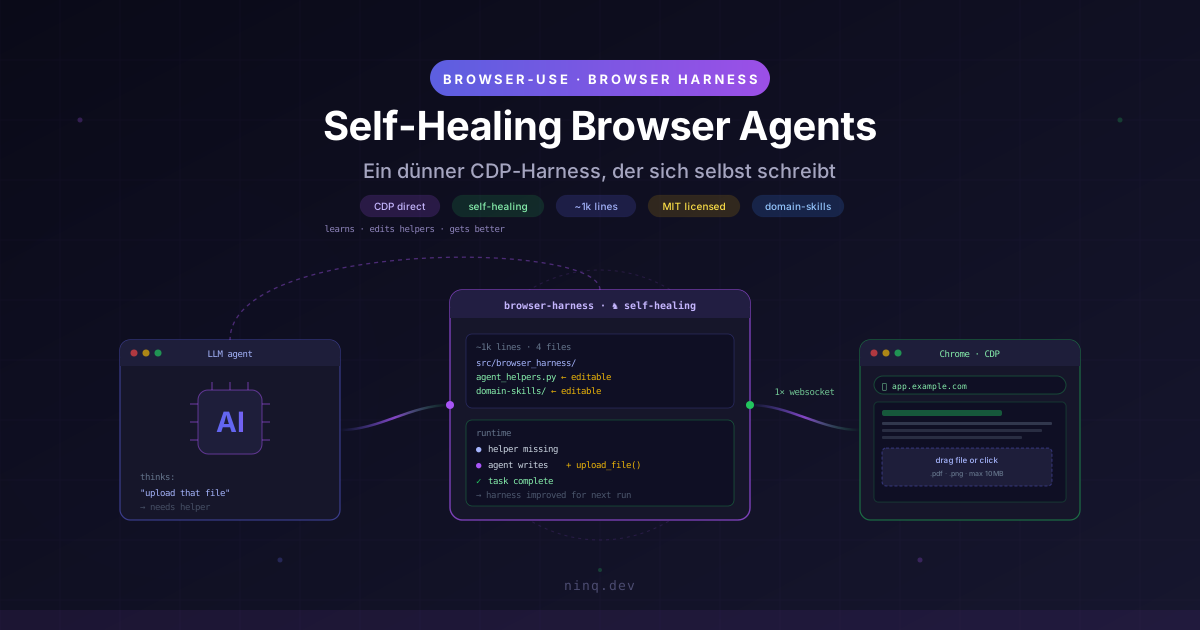
Browser Harness: Wenn der Agent seinen eigenen Browser-Treiber schreibt
Browser Use legt mit Browser Harness einen radikal dünnen, selbstheilenden CDP-Harness vor – ein Open-Source-Werkzeug, das LLM-Agenten dort hinbringt, wo Playwright-Wrapper an ihre Grenzen stoßen.
Wie man einen Finanz-Agenten baut
Eine Schritt-für-Schritt-Anleitung zum Aufbau eines KI-gestützten Finanzagenten — von Subagenten und Tool-Routing bis hin zu Scratchpads und Evaluierungen.
Related Articles